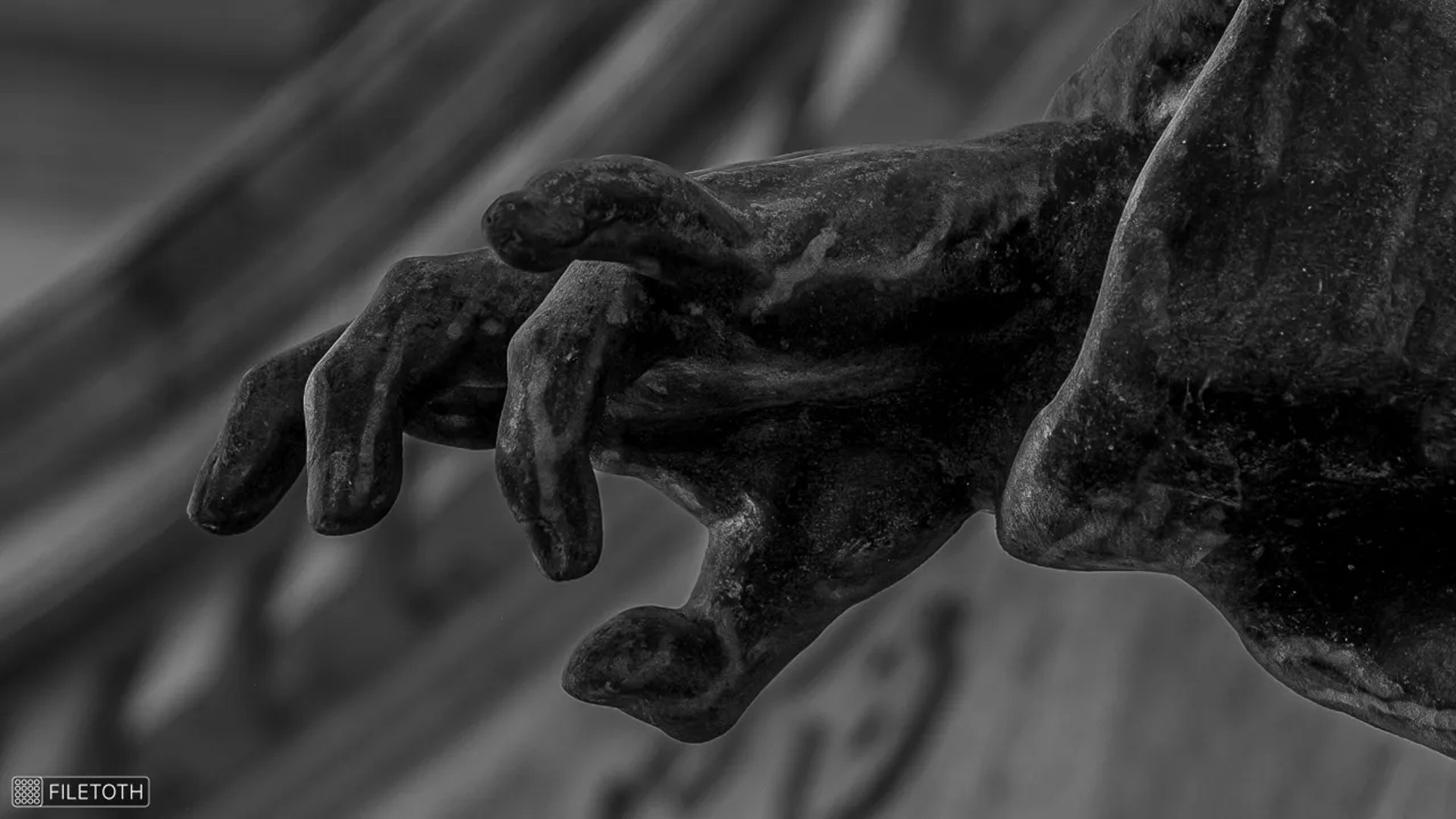
Hands that remember.
MEMENTO
Memory carried across time — gestures connecting the present to what came before.
These statues preserve memories of people, events, losses, and histories that continue to shape a country's collective memory.
The hand of valor
Historical figure and era
The memorial honors ELTE university students who left the lecture halls for the front lines in World War I and never returned. Above the students, the allegorical female figure of Genius raises a wreath, elevating their deaths from private tragedy to a symbol of academic virtue, patriotism, and shared mourning.
Creation and historical context
The idea for the memorial dates to World War I, when a 1917 law called for monuments to local soldiers who had fallen. In 1919, students of the Pázmány Péter University, the predecessor of today’s ELTE, launched a fundraising campaign for a monument to their classmates, but the funds were lost to postwar hyperinflation. More than a decade later, the project was revived, and in 1928, a committee chose the current site, on the wall where the main building meets the neighboring University Church, so remembrance would become part of everyday campus life.
Memorial by György Zala and Jenő Kismarty‑Lechner, November 1, 1930. [2]
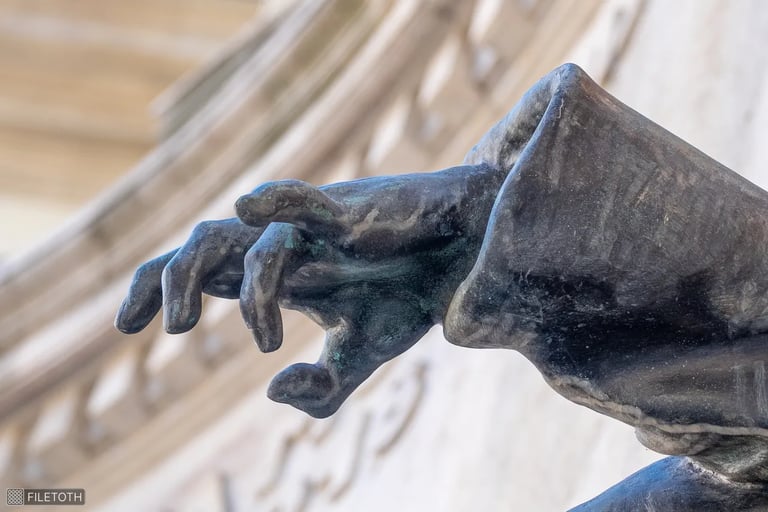
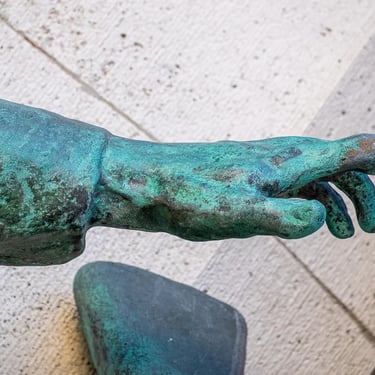
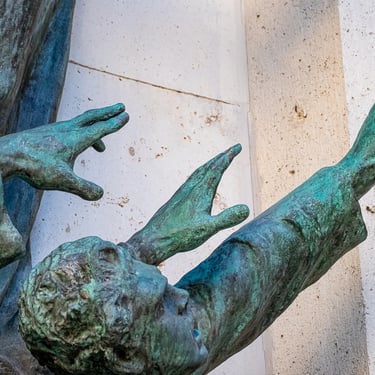
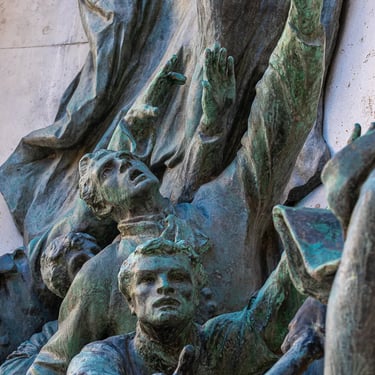
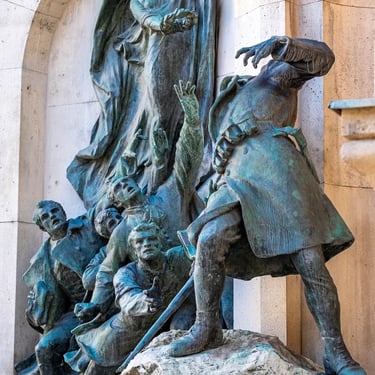
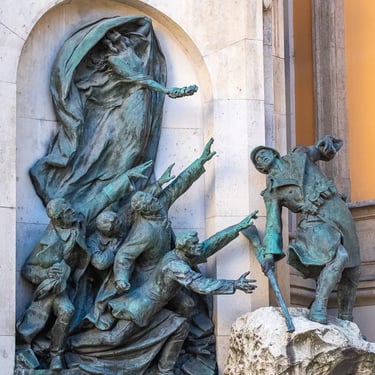
ELTE University Heroic Memorial
The hand of the healer
Historical figure and era
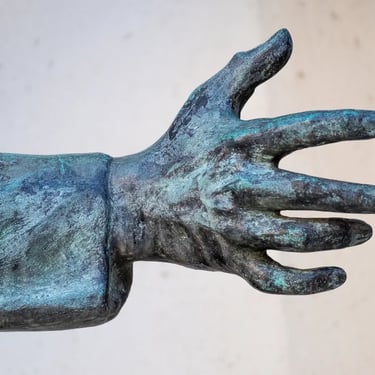
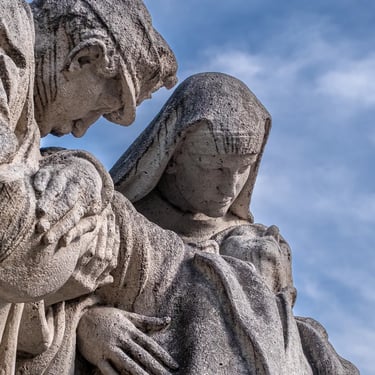
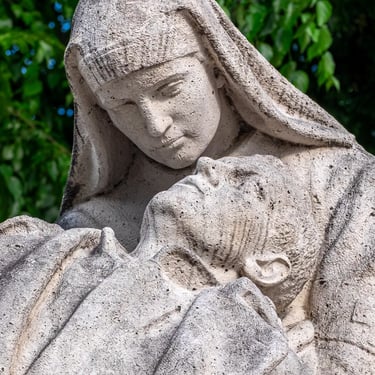
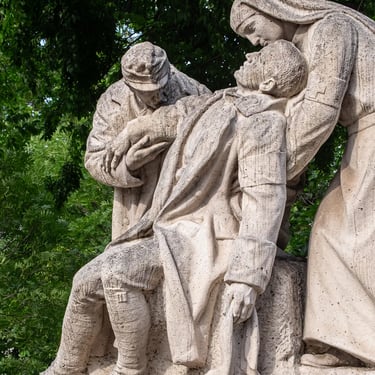
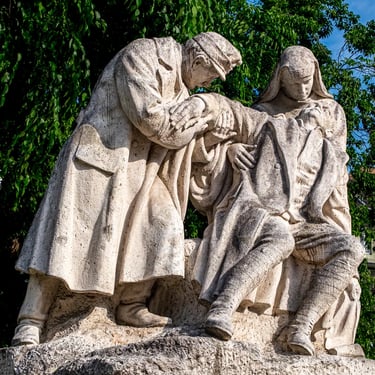
The Heroic Doctors’ Monument commemorates Hungarian physicians who died in the First World War, honoring them as martyrs of professional duty rather than as named individuals. Erected before the university clinics, it links medical service on the front lines and in military hospitals to a broader narrative of sacrifice and faith in the early 20th century.
Creation and historical context
János Horvay’s sculptural group was unveiled on May 17, 1942, during the Second World War, in a ceremony that cast these doctors as exemplars of self-sacrifice and moral steadfastness. Commissioned by the National Hungarian Medical Association and the Scientific Society of Military Doctors, the monument became associated with a pietà-like image of healing transformed into heroism, freezing in stone what contemporary speeches called “the martyrs of duty.”
Monument by János Horvay, May 17, 1942. [40]
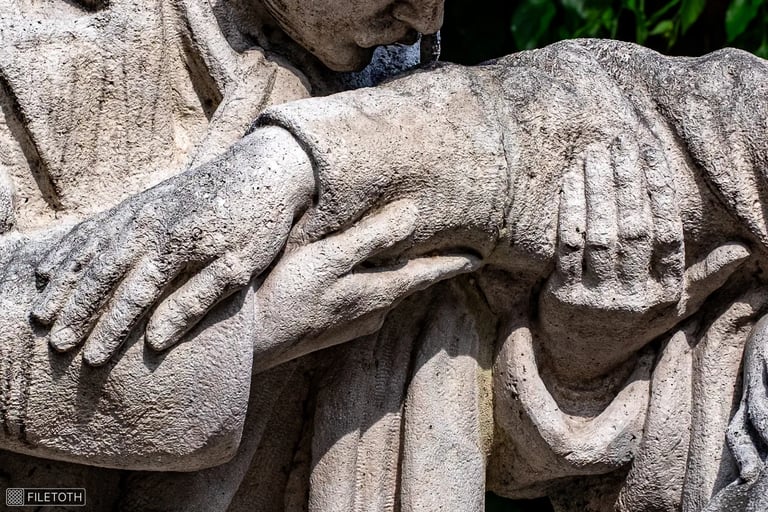
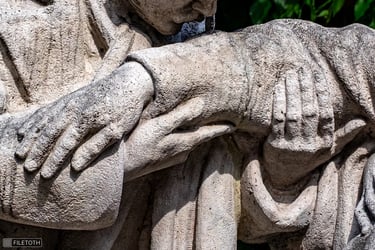
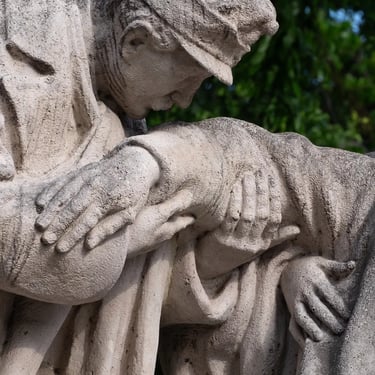
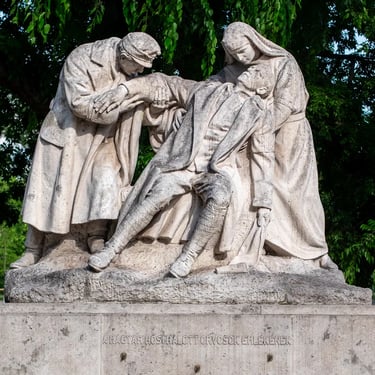
Heroic Doctors' Monument
The hand of exile
Historical figure and era
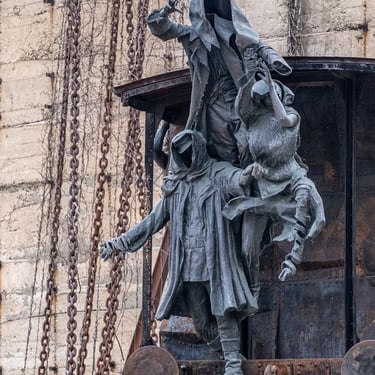
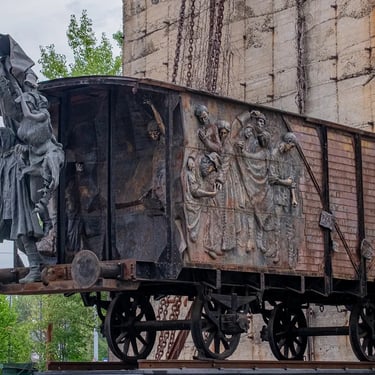
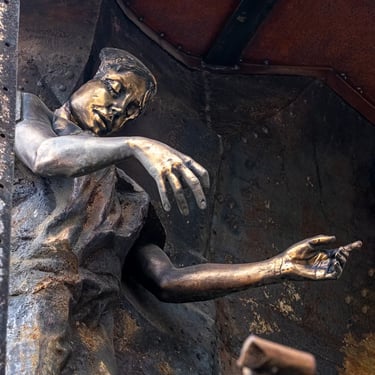
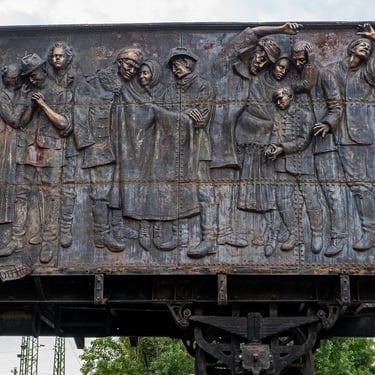
The memorial site serves as an “eternal memento” for the 300,000 Hungarians—and all Carpathian Basin victims of “málenkij robot”—who were deported for forced labor without a court sentence. Located at Ferencváros Railway Station, it marks the departure point from which many prisoners were sent to Soviet camps, and many never returned.
Creation and historical context
The memorial’s central figure, a worn, empty set of clothes, represents those whose bodies did not come home, leaving only absence. By placing this hollow form in a functioning transport hub, the work connects past departures to today’s everyday movement, making the memory of exile part of the city’s ongoing circulation.
Memorial by Péter Párkányi Raab, February 26, 2017. [11]
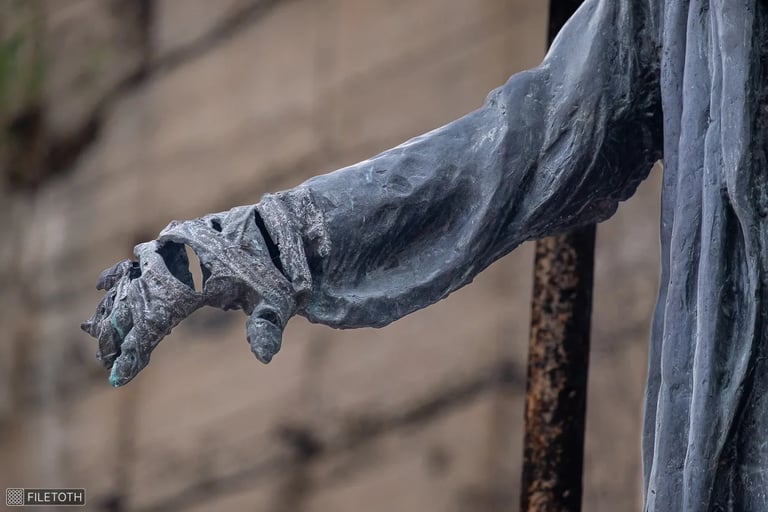
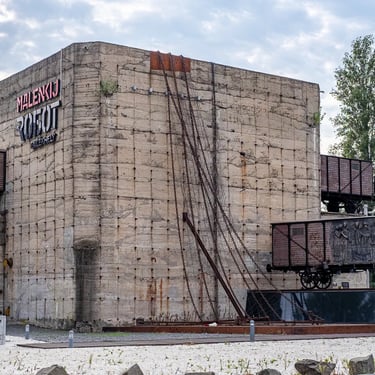
Malenki Robot Memorial
The hand of the fall
Historical figure and era
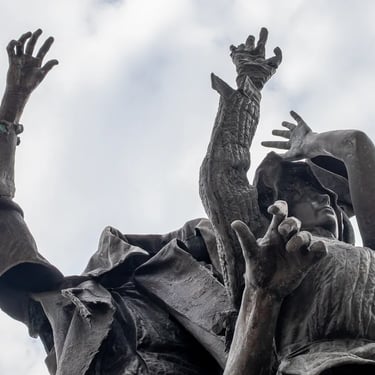
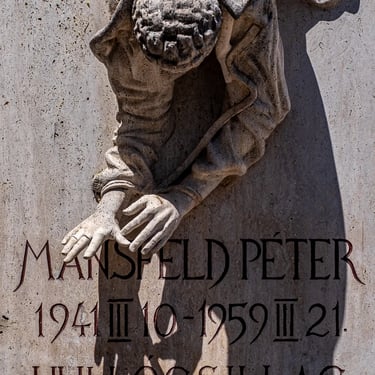
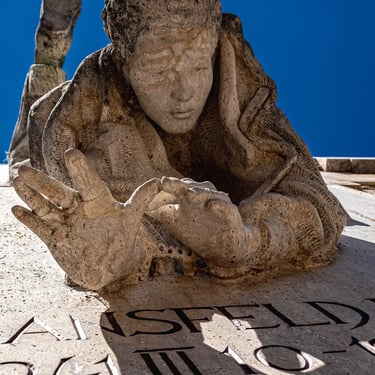
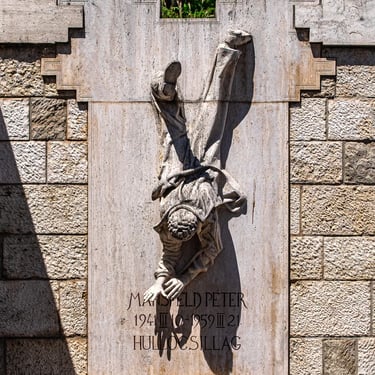
Péter Mansfeld (1941–1959) became a powerful symbol of the reprisals that followed the Hungarian Revolution of 1956. As a teenager, he participated in activities linked to the uprising and was arrested after its defeat. After a politically charged trial, he was executed shortly after his eighteenth birthday, becoming the youngest person executed in connection with the revolution. His story symbolizes the vulnerability of youth and the human cost of state repression.
Creation and historical context
Miklós Melocco's monument, Hullócsillag ("Falling Star"), was unveiled on March 21, 2007, the anniversary of Mansfeld's execution. Rather than portraying him as a hero or martyr, the sculpture depicts him suspended midfall, his handcuffed hands stretched forward. Mounted high above the viewer, the figure commemorates the victims of the post-1956 reprisals without triumphal imagery.
Monument by Miklós Melocco, March 21, 2007. [50]
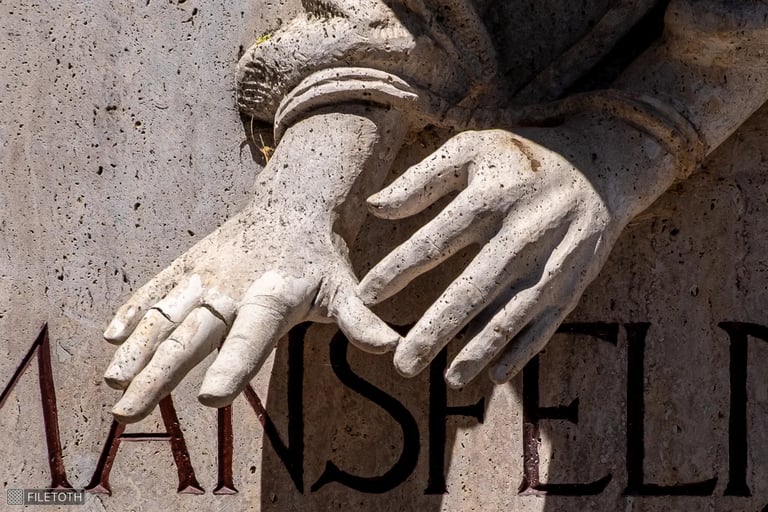
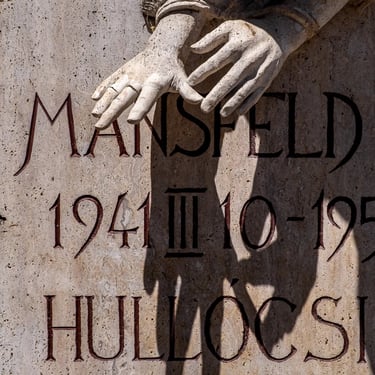
Péter Mansfeld Memorial
The hand of loss
Historical figure and era
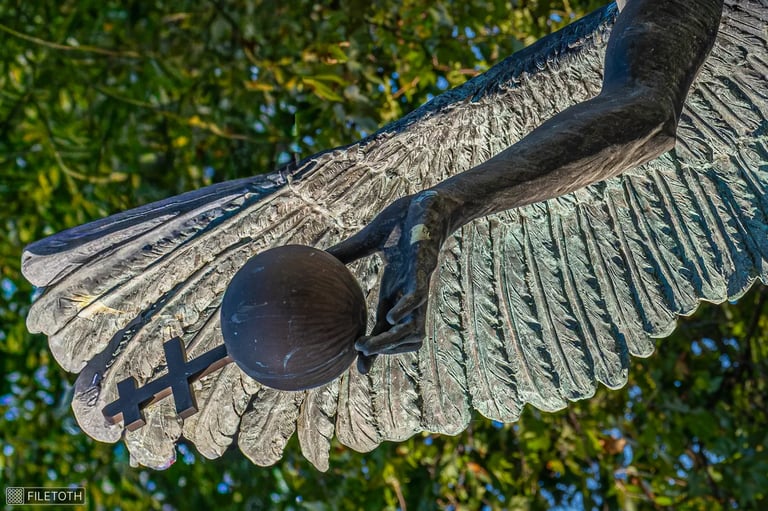
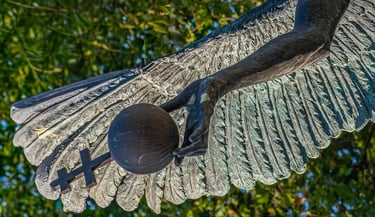
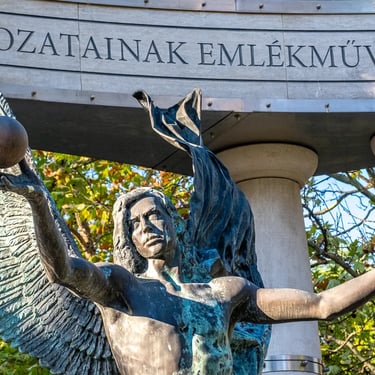
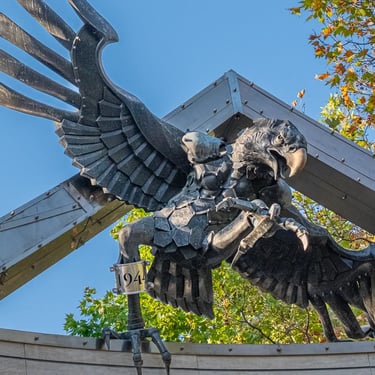
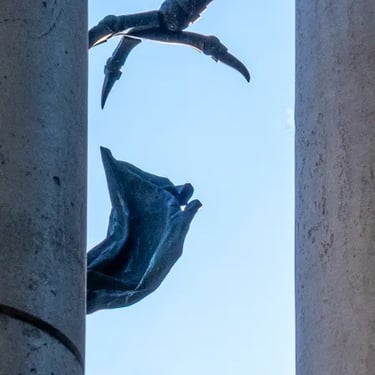
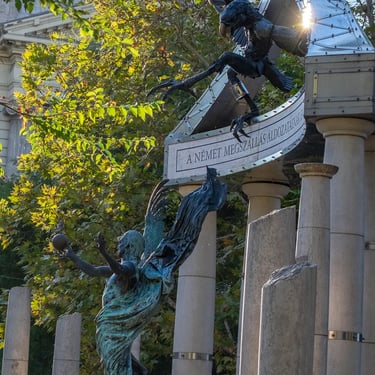
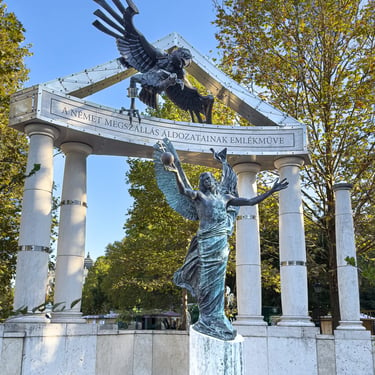
The 'Memorial for the Victims of the German Occupation' stands on Szabadság tér and commemorates the Nazi invasion of Hungary on March 19, 1944. In Péter Párkányi Raab’s 2014 composition, Archangel Gabriel, holding the Hungarian state orb, is attacked by a descending eagle marked with the date 1944.
Creation and historical context
Conceived by the government for the 70th anniversary of the occupation, the monument was installed at night and has never been formally unveiled, as protests and public debate accompanied its inauguration from the outset. Over time, its imagery and inscription have prompted a wide range of responses, from support to criticism, making it one of the city’s most discussed public monuments.
Surrounded by a growing “counter-memorial” of photographs, suitcases, and personal documents left by citizens, the monument has become less a settled commemoration than an ongoing discussion about memory, history, and responsibility in public space.
Memorial by Péter Párkányi Raab, July 20, 2014. [20]
Memorial for the victims
The hand of empathy
Historical figure and era
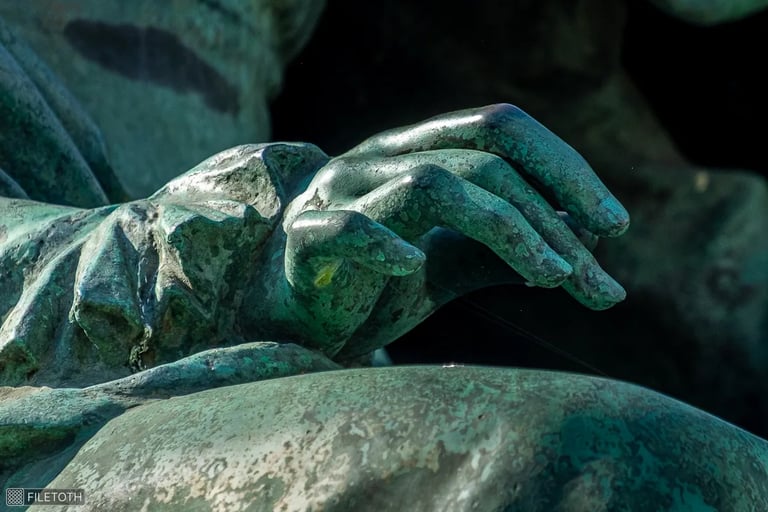
Elisabeth of Bavaria (1837–1898) was Empress of Austria and Queen of Hungary, remembered for supporting Hungarian aspirations and for the 1867 Compromise that created the Austro-Hungarian Monarchy. Her engagement with Hungarian language and culture and her close relationship with leading Hungarian politicians made her an enduring figure of affection and political symbolism.
Creation and historical context
György Zala’s statue of Queen Elisabeth, unveiled in 1932, emerged during the interwar period, when nostalgia for the dual monarchy coexisted with efforts to define a new national identity after the Treaty of Trianon. The sculpture came to be associated with a more intimate image of the Queen, reinforcing her role in public memory as a mediator between imperial power and Hungarian sensibilities.
Statue by György Zala, September 25, 1932. [34]
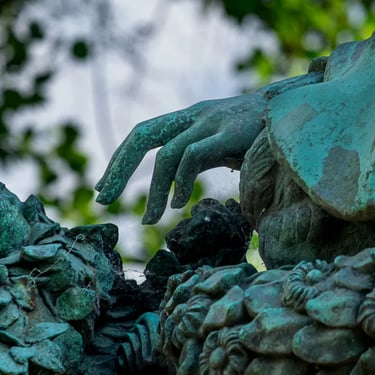
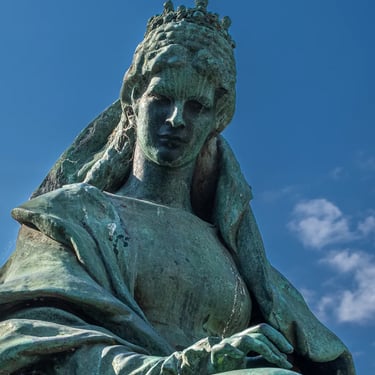
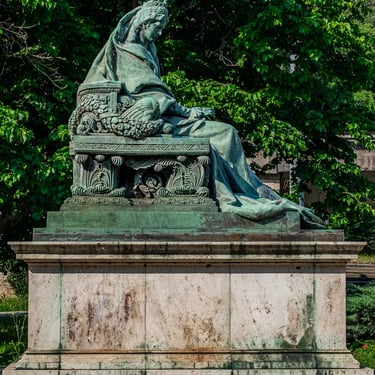
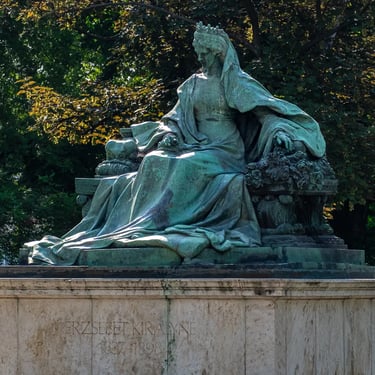
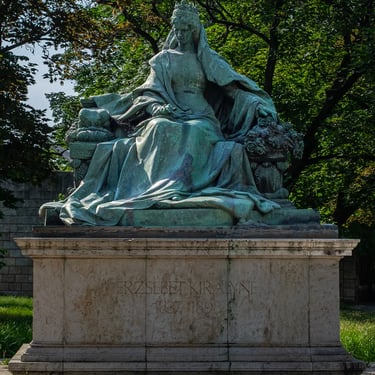
Queen Elisabeth statue
The hand of diplomacy
Historical figure and era
George Herbert Walker Bush (1924–2018) served as president of the United States from 1989 to 1993 and was known for his steady diplomacy amid rapid geopolitical change. His term saw the peaceful end of the Cold War and the reunification of Germany.
Creation and historical context
In July 1989, Bush delivered a speech in the rain in Budapest, tearing up his soaked notes and speaking extemporaneously to the crowd—a moment remembered for its informality and directness. István Máté’s 2020 statue shows him holding papers in his right hand, perhaps echoing those discarded pages and capturing the mix of protocol and spontaneity that marked his visit.
Statue by István Máté, October 27, 2020. [19]
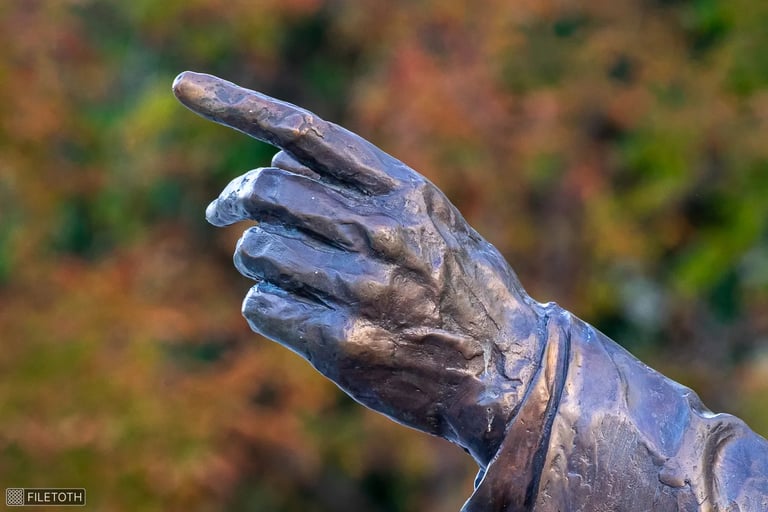
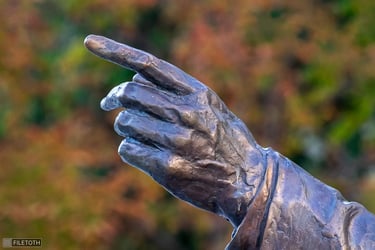
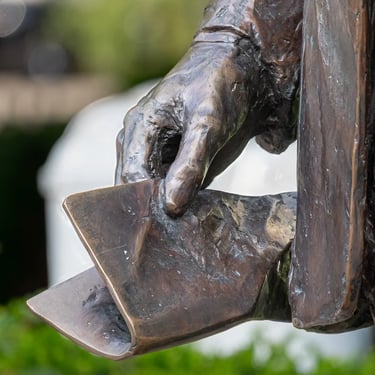
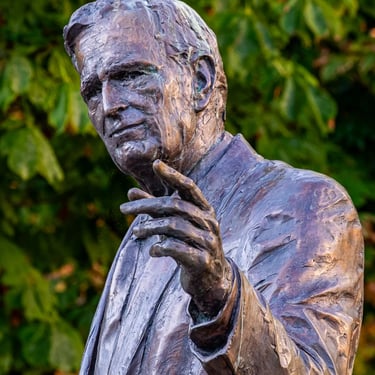
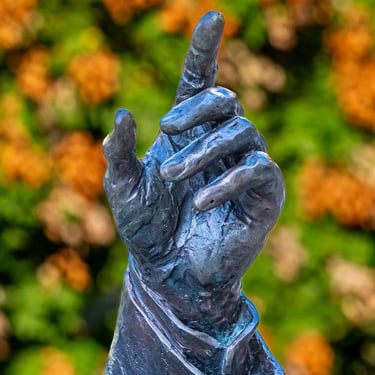
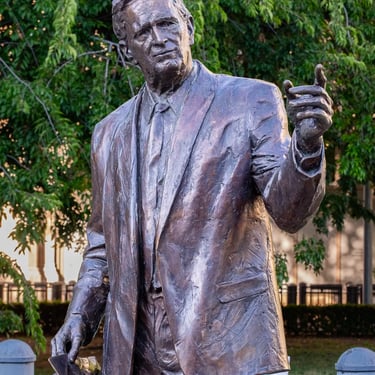
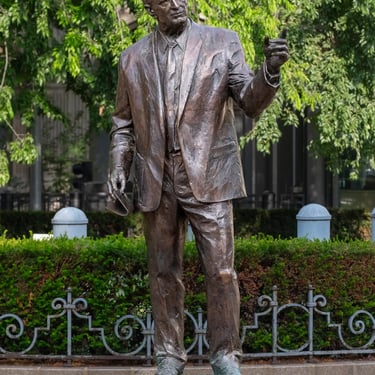
George H. W. Bush statue
The hand of influence
Historical figure and era
Ronald Reagan served as president of the United States from 1981 to 1989, and his leadership and conservative vision reshaped American politics. His presidency is associated with major tax reforms, a strong stance in Cold War diplomacy, and initiatives that expanded the U.S. military and strategic defense programs.
Creation and historical context
István Máté’s 2011 statue depicts Reagan in motion, stepping forward through the square rather than standing on a high pedestal. Installed in central Budapest, it reflects the role his policies are credited with in supporting political change in Central and Eastern Europe.
Statue by István Máté, June 29, 2011. [28]
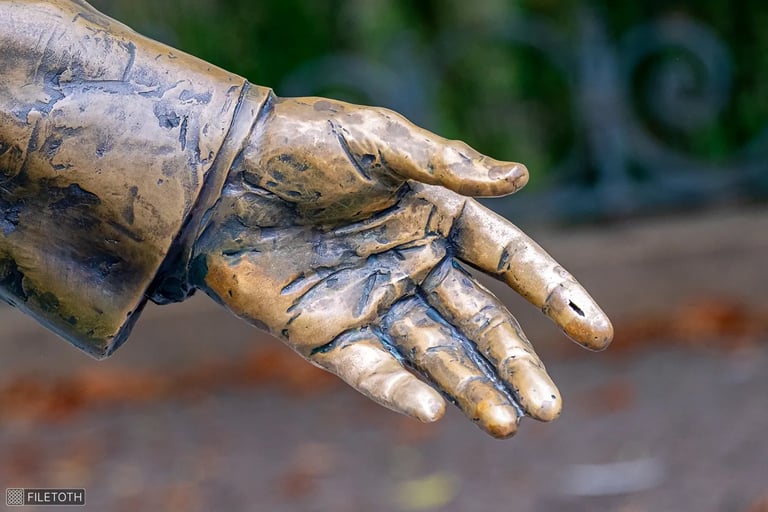
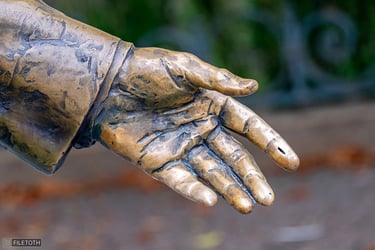
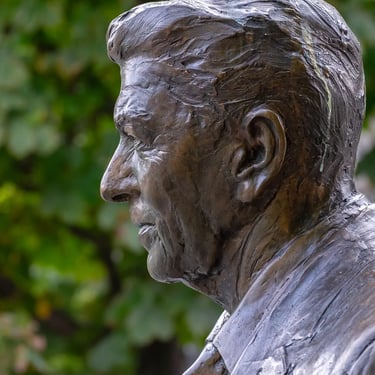
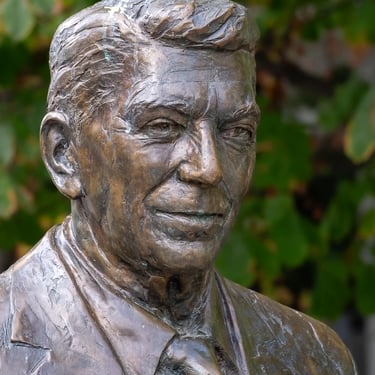
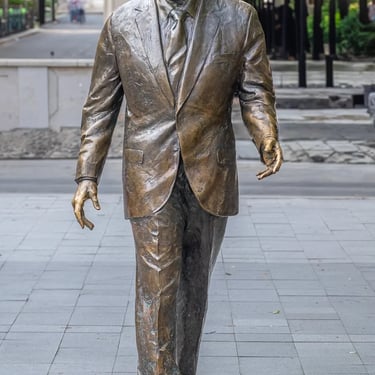
Ronald Reagan statue
The hand of fervor
Historical figure and era
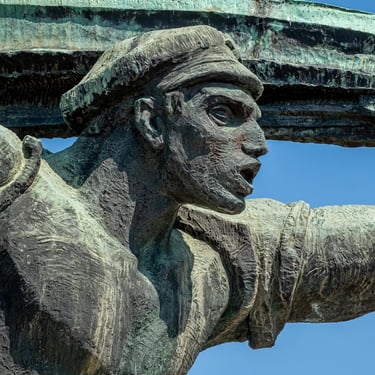
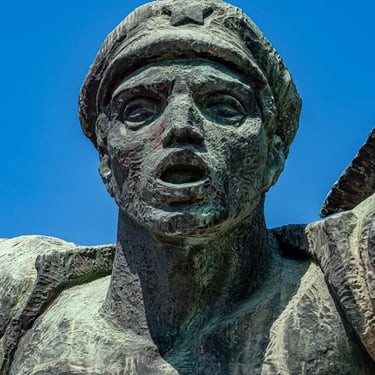
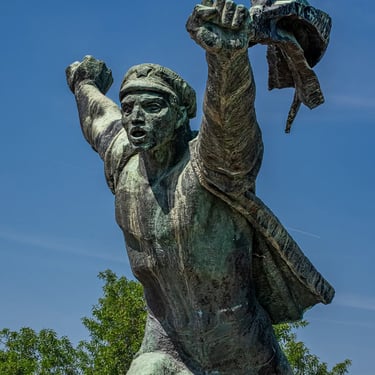
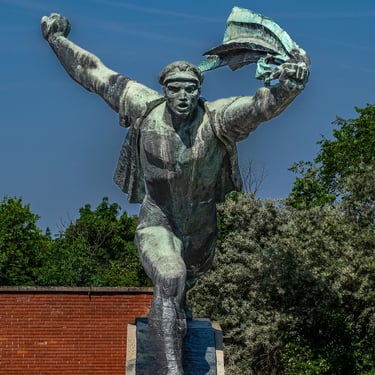
The Republic of Councils Memorial commemorates the 1919 Hungarian Soviet Republic, a revolutionary government that lasted only 133 days yet left a lasting mark on Hungary’s political memory. Its dynamic, flag-bearing figure evokes the mass demonstrations and radical social visions that briefly reshaped Budapest after the First World War and the collapse of the Habsburg Empire.
Creation and historical context
István Kiss’s eight-meter sculpture was inaugurated on March 21, 1969, the 50th anniversary of the Hungarian Soviet Republic, during a socialist period that sought to reinterpret 1919 as part of its historical lineage. The work became associated with both state-sponsored revolutionary imagery and later debates about the relationship among power, protest, and public space.
Statue by István Kiss, March 21, 1969. [35]
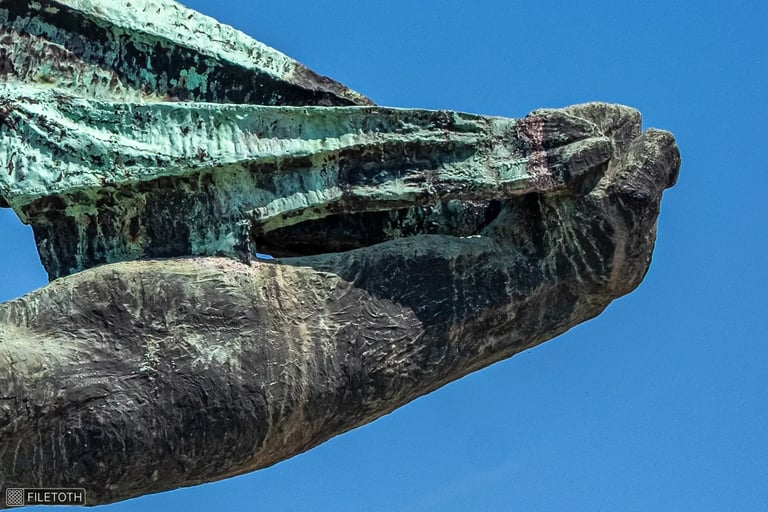
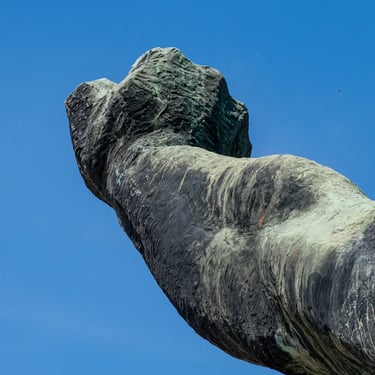
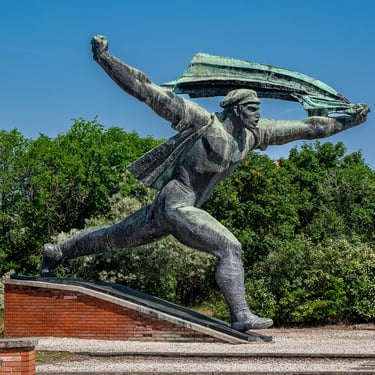
Republic of Councils Memorial
The hand of the messenger
Historical figure and era
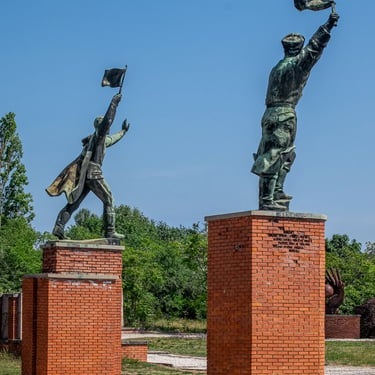
Captain Miklós Steinmetz and Captain Ilya Ostapenko were Soviet officers who approached the besieged city of Budapest during the Second World War under flags of truce to negotiate a surrender and prevent further destruction. Steinmetz died when his vehicle struck a mine before reaching its destination, while Ostapenko delivered his message but was killed on his return. Their deaths were later incorporated into socialist-era narratives that portrayed them as heroic messengers of peace.
Creation and historical context
The statues were erected during the early socialist period (1951–1958), when public art emphasized Soviet–Hungarian comradeship and wartime sacrifice. As research and public debate revisited the officers’ deaths, the monuments became associated not only with their original commemorative purpose but also with broader questions of memory, propaganda, and wartime interpretation. The “hand of the messenger” evokes the fragile space of negotiation and the vulnerability of those who carry words rather than weapons, inviting reflection on the risks of peacemaking in war.
Steinmetz statue by Sándor Mikus, 1958. Ostapenko statue by Jenő Kerényi, 1951. [36]
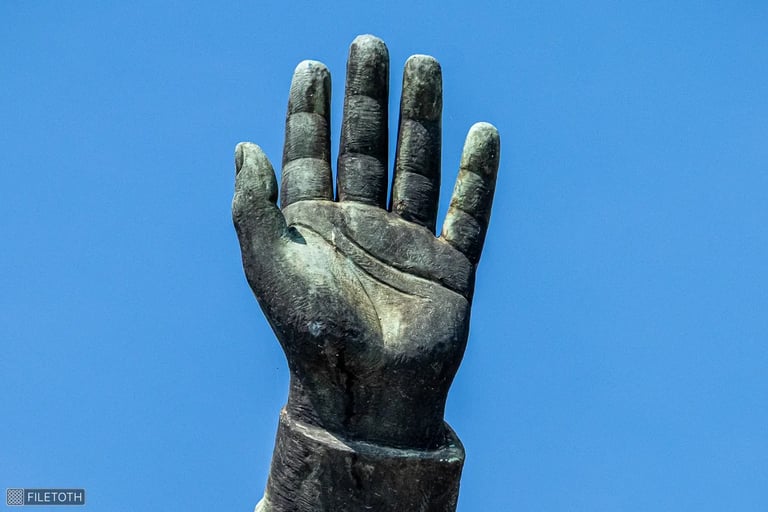
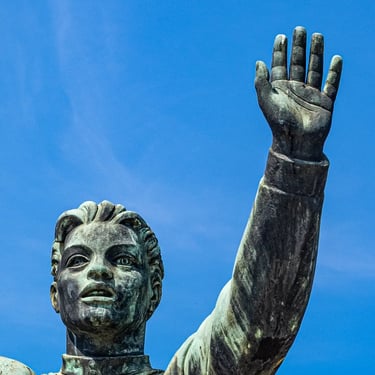
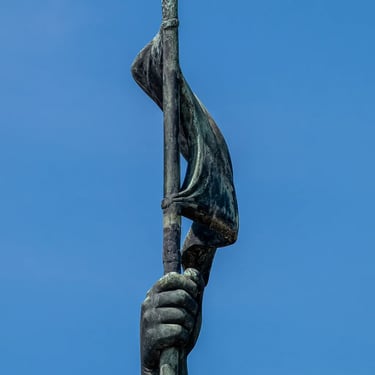
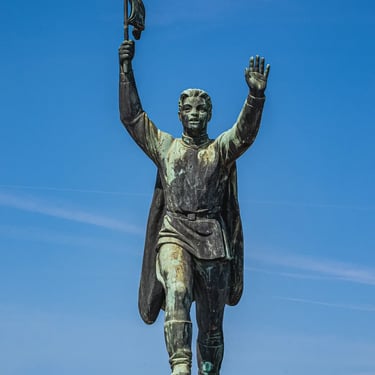
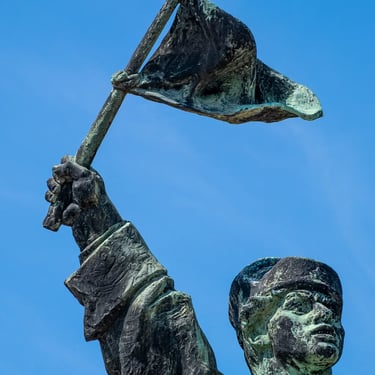
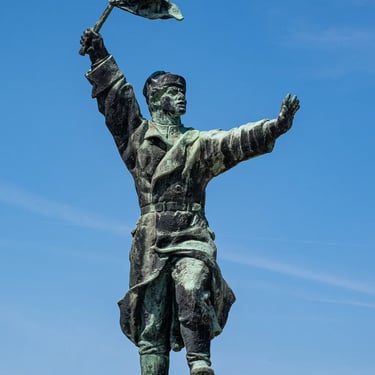
Steinmetz and Ostapenko statues
The hand of triumph
Historical figure and era
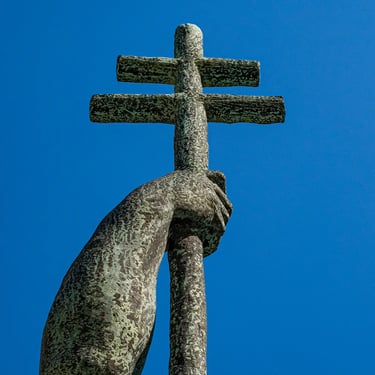
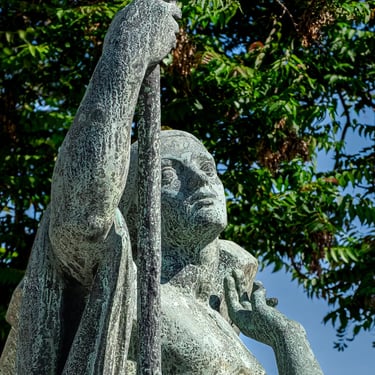
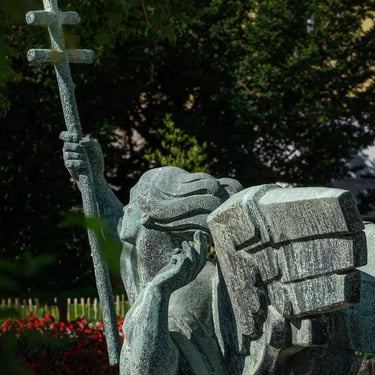
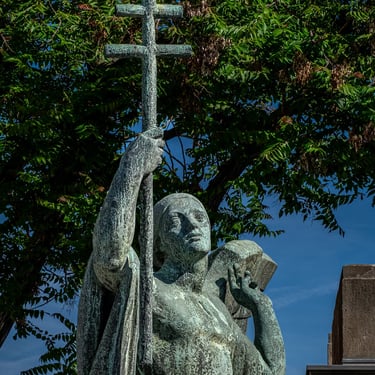
The Memorial of Buda Castle Recovery commemorates the 1686 recapture of Buda from Ottoman rule by a coalition of European Christian forces, ending 145 years of occupation. Its Latin and Hungarian inscriptions dedicate the monument to the “Christian heroes” who fell during the siege and to the royal castle “delivered from slavery into liberty.”
Creation and historical context
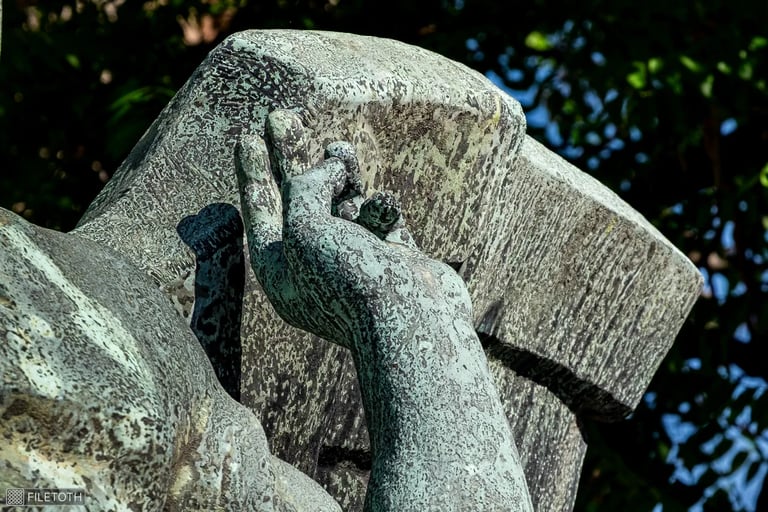
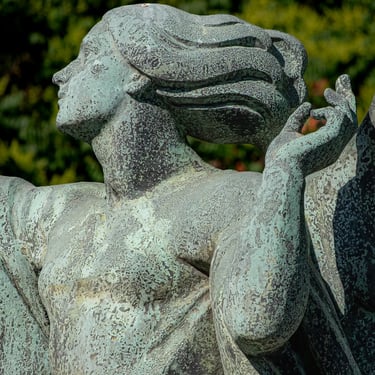
Béla Ohmann’s monument was erected by the capital in 1936, on the 250th anniversary of the liberation, and placed beside the Vienna Gate at the edge of the castle district. The winged female figure, striding forward and raising an apostolic double cross, has been associated with interwar Hungary’s desire to celebrate triumphant valor and Christian victory within an explicitly nationalist memory landscape.
Known as the “Rushing Angel,” the statue can be read both as a reference to a specific 17th‑century military success and as a more open‑ended gesture toward survival, resilience, and the layered histories embedded in the hill.
Memorial by Béla Ohmann, September 2, 1936. [42]
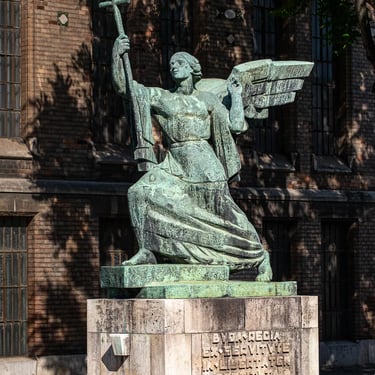
Memorial of Buda Castle Recovery
The hands of memento
Historical figure and era
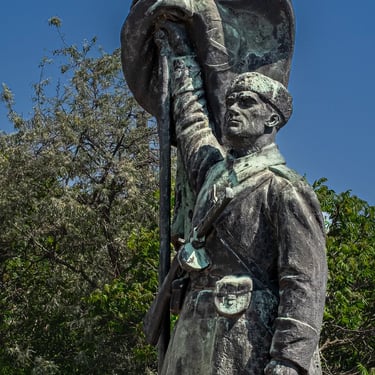
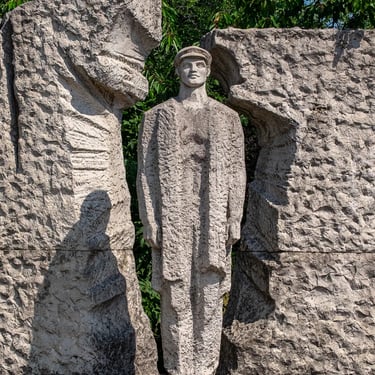
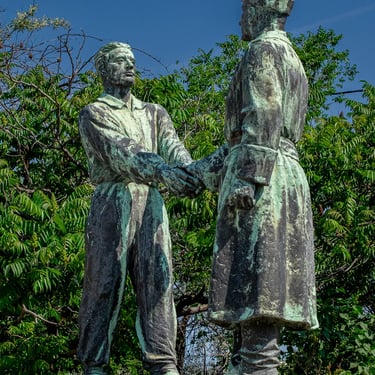
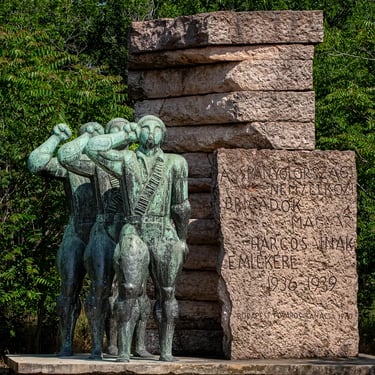
Memento Park preserves a selection of public monuments from Hungary's socialist era. Among them are statues of Lenin, Soviet soldiers, workers, and political activists whose gestures once embodied official narratives of liberation, international solidarity, anti-fascism, and revolutionary commitment. Together, they reflect the visual language the state used to shape public memory from the late 1940s to the end of socialism.
Creation and historical context
The monuments were created between the late 1940s and the final decades of state socialism, when public art visualized ideological loyalty in squares, crossroads, and ceremonial sites across Budapest. After the political changes of 1989–1990, many of these works were removed from their original locations and later gathered in Memento Park, where they could be preserved without continuing their former commemorative role. Their relocation to Memento Park has transformed these monuments into historical artifacts rather than active instruments of political messaging.
Statues: Lenin (1958) by unknown artist; Soviet–Hungarian friendship (1956) and Soviet Soldier (1947) by Zsigmond Kisfaludy Srobl; Liberation memorial (1971) by István Kiss; Hungarian fighters of the Spanish International Brigades (1970) by Agamemnon Makrisz, Martyrs of the counter‑revolution (1960) by id. Viktor Kalló. [37]
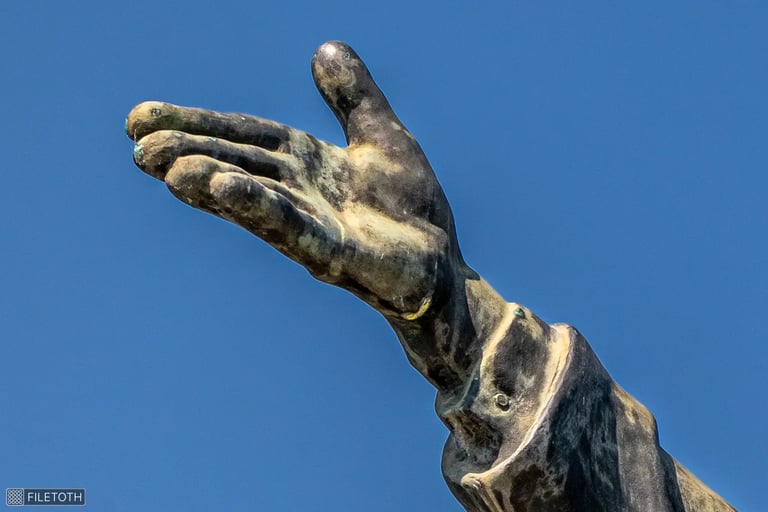
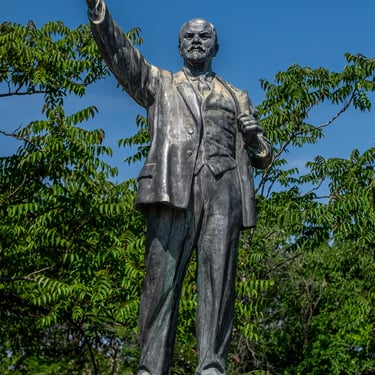
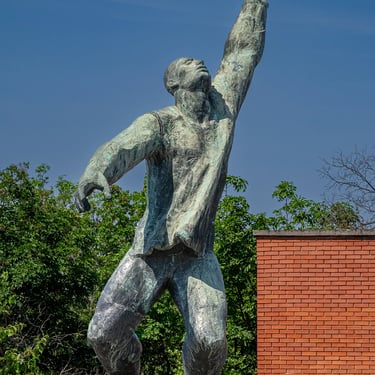
Memento Park statues
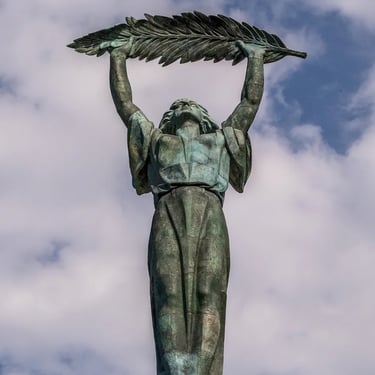
The hand of freedom
Historical figure and era
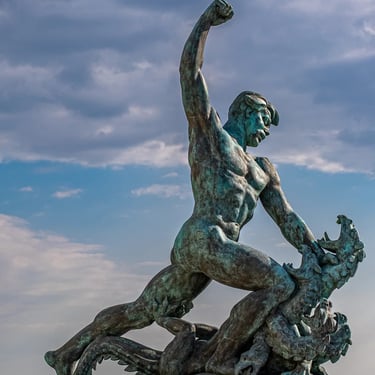
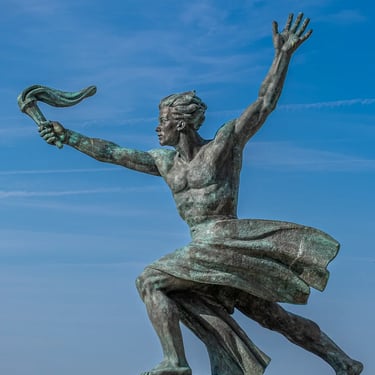
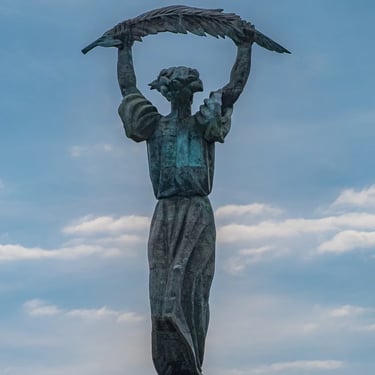
The Monument of Freedom (or Statue of Liberty) was erected in 1947 to commemorate the Soviet Red Army’s role in liberating Hungary from Nazi occupation at the end of the Second World War. As political regimes and historical interpretations shifted, the monument came to signify a broader, more ambiguous story of liberation, occupation, and the quest for Hungarian freedom.
Creation and historical context
Designed by Zsigmond Kisfaludi Strobl and completed in the immediate postwar years, the monument was part of a commemorative program that reshaped Budapest’s skyline. Originally dedicated to the Soviet liberation of Hungary, it reflected the emerging socialist era. Since then, it has been repeatedly reinterpreted, becoming associated not only with wartime liberation but also with broader ideas of national resilience and freedom. The figure’s upward gesture can be read as an aspiration rather than a fixed political message.
Monument by Zsigmond Kisfaludi Strobl, April 5, 1945. [33]
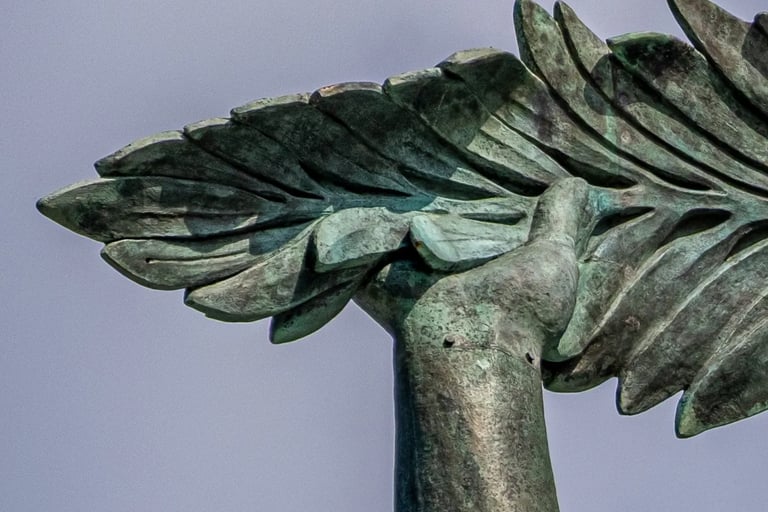
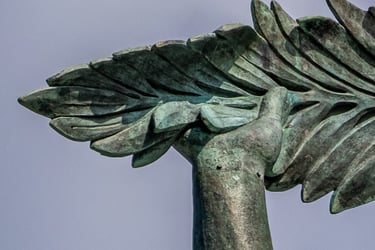
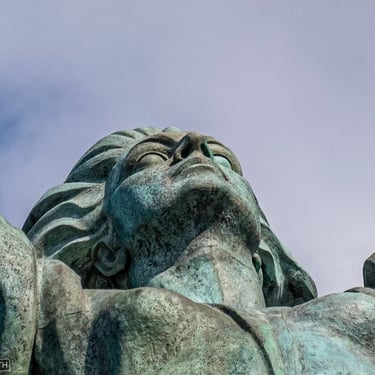
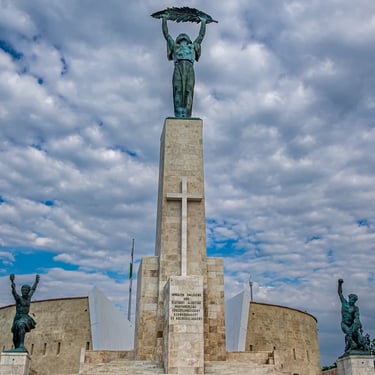
Monument of Freedom
This perspective continues to expand over time.
Explore other perspectives:
Memento | Expression | Devotion | Endeavor
Browse the full reference index.
An independent photographic and research project by FILETOTH.
About | Legal and Privacy
Copyright © 2026 FILETOTH.
For inquiries or collaborations, please feel free to get in touch.